
Standing desks have become a staple in modern workplaces, but one of the most common questions users ask is: how long should you actually stand during the day?
With increasing demand for ergonomic office furniture in Australia, sit-stand desks, and workplace wellbeing solutions, understanding the correct balance between sitting and standing is essential for both productivity and long-term health.
The Key Principle: Movement Over Static Postures
The most important thing to understand is that standing desks are not designed for standing all day.
Research consistently shows that both prolonged sitting and prolonged standing can lead to discomfort and health issues. The real benefit comes from regular movement and alternating positions throughout the day.
In other words, the goal is not to “replace sitting with standing,” but to avoid staying in one position for too long.
So, How Long Should You Stand at a Standing Desk?
There is no single perfect number, but most ergonomic guidelines recommend a balanced sit-stand routine throughout the workday:
- Aim for a total of 2–4 hours of standing per 8-hour workday
- Stand for 15–30 minutes per hour
- Or alternate every 30–60 minutes
The Ideal Sit–Stand Ratio
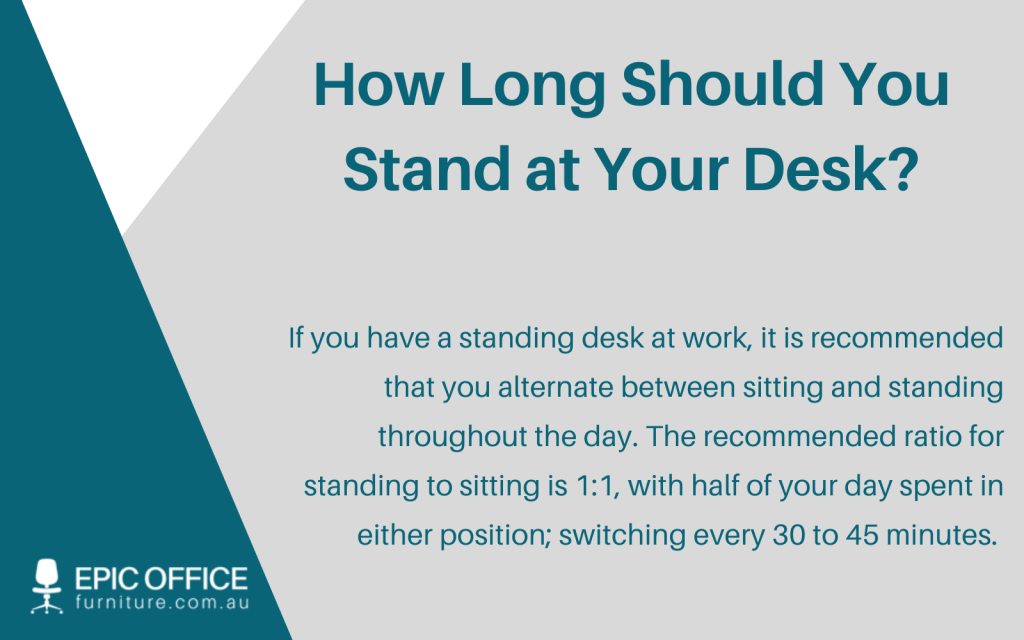
One of the most widely recommended approaches is a sit-to-stand ratio of 1:1 or 2:1, depending on comfort and experience level.
For example:
- Beginner setup: 45 minutes sitting / 15 minutes standing
- Balanced routine: 30 minutes sitting / 30 minutes standing
- Advanced routine: Frequent switching every 30 minutes
Some ergonomic guidance even suggests standing around 30–40% of your total work time for optimal comfort and productivity.
Why You Shouldn’t Stand All Day?
A common misconception is that standing all day is healthier than sitting – but this is not true.
Standing for long periods without movement can lead to:
- Leg and foot fatigue
- Lower back strain
- Joint pressure
- Reduced comfort and focus
Just like sitting, standing becomes problematic when it is static and prolonged. The key is variation.
Why Alternating Positions Improves Productivity?
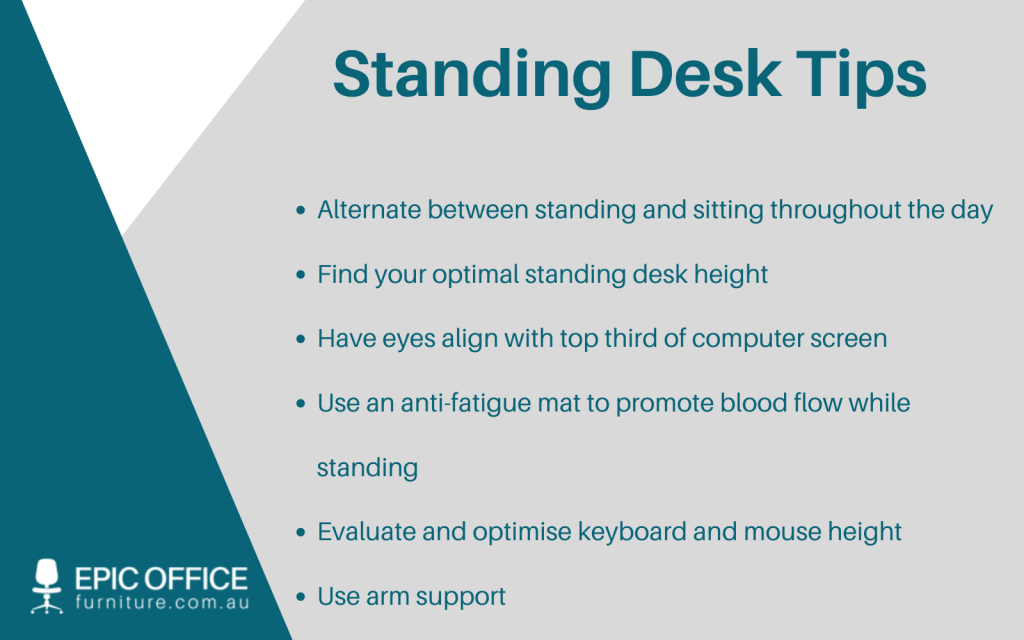
Switching between sitting and standing throughout the day has been linked to:
- Better energy levels and alertness
- Reduced musculoskeletal strain
- Improved focus and task performance
- Higher overall workplace productivity
This is why modern workplaces increasingly invest in height-adjustable desks, ergonomic chairs, and flexible workstation setups.
How to Build a Healthy Standing Desk Routine?
If you’re new to a standing desk, it’s important to ease into it rather than switching too aggressively.
Beginner routine:
- Start with 10–15 minutes standing per hour
- Gradually increase over time
Intermediate routine:
- Alternate every 30–45 minutes
- Introduce movement breaks
Advanced routine:
- Combine with walking or stretching breaks
- Frequent switching based on comfort and tasks
The Bigger Picture: Ergonomics Drives Workplace Performance
Standing desks are just one part of a broader ergonomic strategy.
Businesses investing in ergonomic office furniture, workspace optimisation, and employee wellbeing solutions are seeing improvements in:
- Productivity and focus
- Employee satisfaction
- Reduced fatigue and absenteeism
- Long-term workplace health outcomes
A well-designed workstation supports both physical health and business performance.